Private Mobile Hibachi Chef at Home. We Serve Atlanta and Surrounding Areas.

If you’ve ever searched for atlanta hibachi catering, hibachi grill at home catering, or even a private chef in Atlanta GA, you’ve probably noticed that the words teppanyaki and hibachi are used almost interchangeably. Restaurants, catering companies, and event services across the U.S. often mix these terms, which naturally leads to confusion.
So what’s the real difference between teppanyaki and hibachi? And why do most hibachi in your home experiences actually use teppanyaki-style cooking? Understanding this distinction helps customers know exactly what to expect when booking a home hibachi party or a private hibachi party.
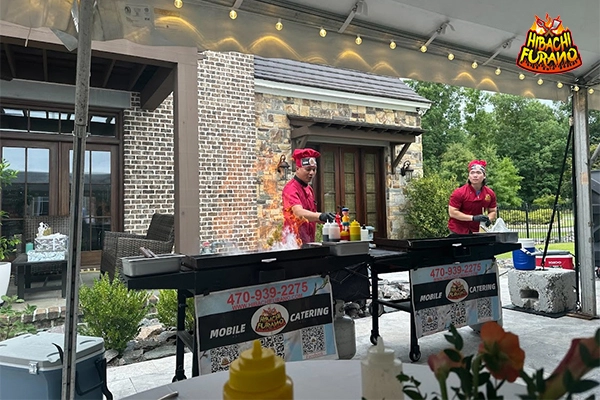
In the United States, hibachi usually refers to teppanyaki-style cooking, where a chef prepares food on a flat iron grill directly in front of guests. This is the style most people expect when booking hibachi cooked at your home or hibachi to my house services.
Traditionally, hibachi is a Japanese charcoal grill, while teppanyaki uses a flat steel griddle. However, in the U.S., the term “hibachi” has evolved to describe the interactive teppanyaki experience — especially in restaurants, hibachi private party events, and mobile catering setups.
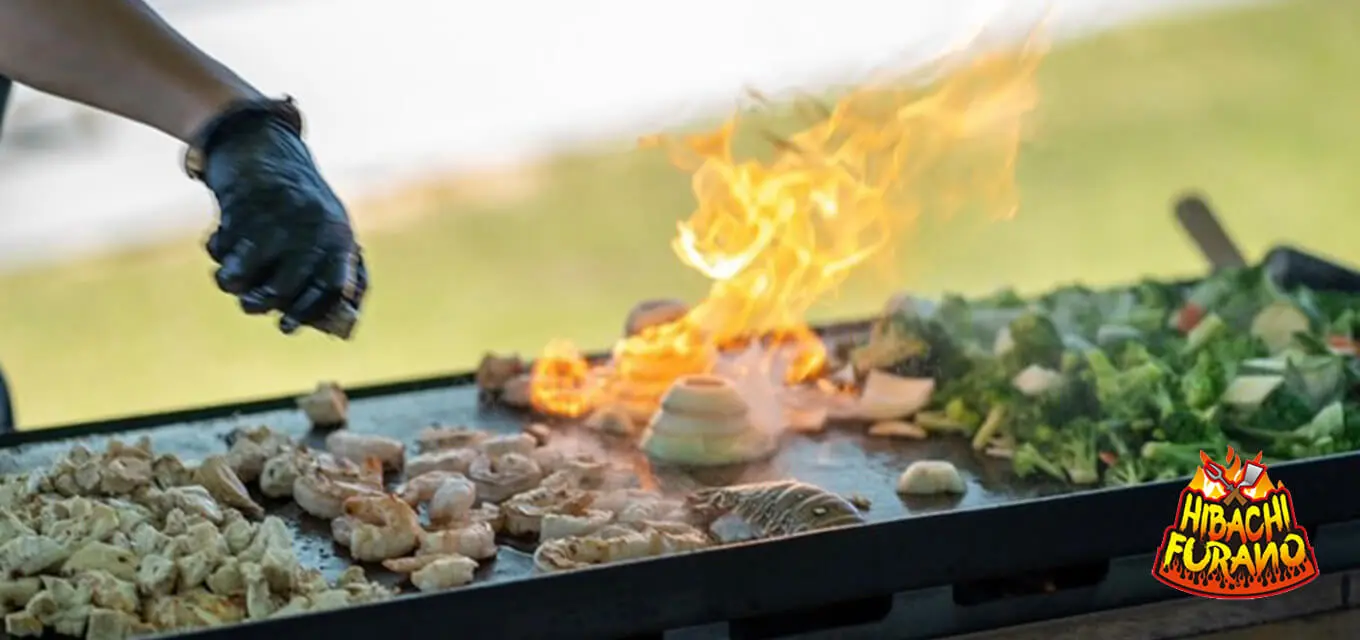
Teppanyaki (鉄板焼き) translates to “grilling on an iron plate.” It refers specifically to cooking on a flat metal griddle, which allows chefs to prepare multiple ingredients at once while engaging with guests.
Teppanyaki gained popularity in the U.S. because it offers more than just food. It delivers:
Live cooking
Entertainment
A social dining experience
This combination made teppanyaki the foundation for what Americans now recognize as hibachi in home chef services and hibachi grill at home catering.
Because of its flexibility and safety, teppanyaki is ideal for:
Home hibachi parties
Birthday celebrations
Corporate gatherings
Private chef experiences
Most private hibachi party setups rely on teppanyaki grills rather than charcoal-based hibachi equipment.
Hibachi (火鉢) literally means “fire bowl.” In Japan, a hibachi is a small charcoal grill traditionally used for simple grilling or heating.
Traditional hibachi:
Uses charcoal
Has an open grate
Focuses on simple cooking
In contrast, what Americans call hibachi today is usually:
Flat-top grilling
Performed in front of guests
Designed for group dining and entertainment
This shift is why hibachi on the go menu offerings look very similar to teppanyaki restaurant menus.
When Japanese-style steakhouses expanded in the U.S., restaurant owners adapted terminology to fit American preferences. The word “hibachi” was:
Easier to pronounce
More memorable
Strongly associated with fire and grilling
Over time, it became the dominant label for teppanyaki-style dining, both in restaurants and in atlanta hibachi catering services.
Teppanyaki: flat steel griddle
Traditional hibachi: charcoal grill
American hibachi: teppanyaki-style flat grill
Teppanyaki focuses on live cooking and interaction
Traditional hibachi is minimal and functional
U.S. hibachi emphasizes performance and group engagement
This explains why hibachi in your home services are designed around teppanyaki techniques.
If you book hibachi grill at home catering or hibachi cooked at your home, the chef will typically bring:
A flat-top grill
Teppanyaki cooking tools
Ingredients designed for fast, interactive preparation
This setup allows chefs to serve groups efficiently while delivering the entertainment customers expect from a home hibachi party.
A modern hibachi experience at home usually means:
A professional chef arrives at your location
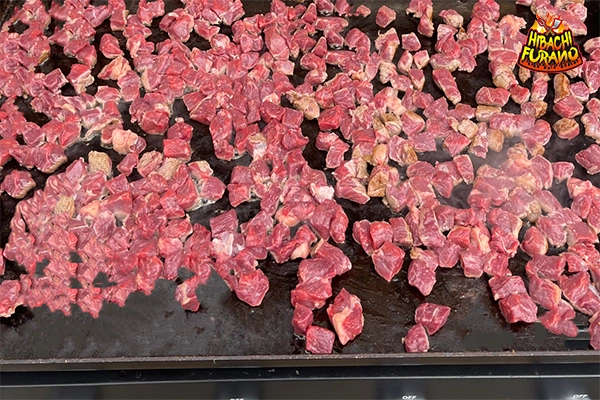
Food is cooked live on a flat grill
Guests enjoy both dinner and entertainment
Whether it’s a birthday or a hibachi private party, this format mirrors teppanyaki dining — just in a more personal setting.
Many customers searching for hibachi to my house are essentially looking for a private chef in Atlanta GA who specializes in teppanyaki-style hibachi cooking.

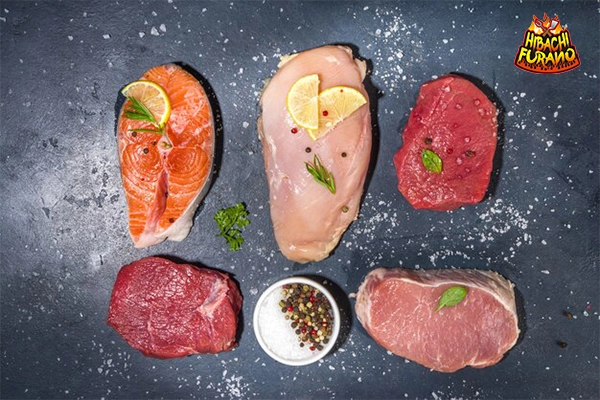
A typical hibachi on the go menu reflects classic teppanyaki offerings, such as:
Steak
Chicken
Shrimp
Fried rice
Vegetables
These menu items are optimized for quick cooking on a flat grill, making them perfect for mobile setups and hibachi in home chef services.
For private events, teppanyaki-style hibachi has clear advantages:
Faster service for groups
Safer cooking equipment
More engaging experience
That’s why nearly every private hibachi party or hibachi private party in the U.S. relies on teppanyaki grills rather than traditional hibachi charcoal setups.
From a technical perspective:
Teppanyaki is the correct cooking method
Hibachi is the commonly used American term
From a customer perspective:
Searching “hibachi” delivers the expected experience
Learning about teppanyaki adds clarity and trust
That’s why professional atlanta hibachi catering companies often explain both terms rather than choosing just one.
Knowing the difference between teppanyaki and hibachi helps customers:
Set clear expectations
Understand the cooking style
Feel confident when booking a hibachi in your home experience
It also explains why most hibachi grill at home catering services look very similar — because they are built on teppanyaki cooking.
In today’s U.S. search landscape, the word “hibachi” no longer means what it originally meant in Japan — and Google is fully aware of that shift.
When Americans search for “hibachi,” they are usually not looking for a traditional charcoal grill or a historical definition. Instead, they expect to see flat-top grilling, chefs cooking in front of guests, and an experience that feels social and entertaining. This expectation has been shaped by decades of Japanese steakhouses, restaurant branding, and, more recently, the rise of hibachi catering and hibachi at home services.
Google reflects this behavior in its search results. A quick look at the SERP for “hibachi,” “hibachi catering,” or “hibachi at home” shows pages that clearly describe teppanyaki-style cooking — flat grills, live preparation, and interactive dining. Traditional hibachi definitions rarely appear unless the query is specifically informational or historical.
This is a good example of how Google adapts to search intent over strict definitions. Rather than forcing the original meaning of the word, Google prioritizes what users actually want when they type “hibachi” into the search bar. In practical terms, that means Google treats “hibachi” in the U.S. as a modern, experience-based dining concept, closely tied to teppanyaki cooking methods.
For American diners, the word “hibachi” has become shorthand. It doesn’t describe the equipment as much as it describes the experience: a chef at your table, food cooked fresh in front of you, and a shared event rather than a quiet meal. That’s why people searching for hibachi in your home or a private hibachi party are rarely confused when the chef arrives with a flat iron grill.
From an SEO and content perspective, this matters. Pages that acknowledge this language shift — by explaining both the traditional meaning and the modern American usage — tend to perform better. They align with how people search while still providing accurate context.
In short, Google doesn’t see the American use of “hibachi” as a mistake. It sees it as an evolution. And websites that recognize how the term is used today are far more likely to match user intent, earn trust, and rank well in search results.
In the U.S., hibachi usually refers to teppanyaki-style cooking. Traditional hibachi uses a charcoal grill, while teppanyaki uses a flat iron grill and live cooking performance.
Because early Japanese steakhouses in the U.S. used the word “hibachi” for marketing. Over time, the term became associated with teppanyaki-style dining and entertainment.
Most hibachi at home and hibachi catering services use teppanyaki-style flat grills. This allows chefs to cook safely, efficiently, and interact with guests.
Teppanyaki and hibachi are not the same — but in the United States, they’ve become closely linked.
Hibachi originated as a charcoal grill in Japan
Teppanyaki uses a flat iron grill and emphasizes performance
In the U.S., hibachi usually means teppanyaki-style cooking
This is why home hibachi party services, hibachi private party bookings, and atlanta hibachi catering experiences all rely on teppanyaki techniques to deliver the food and entertainment people expect.