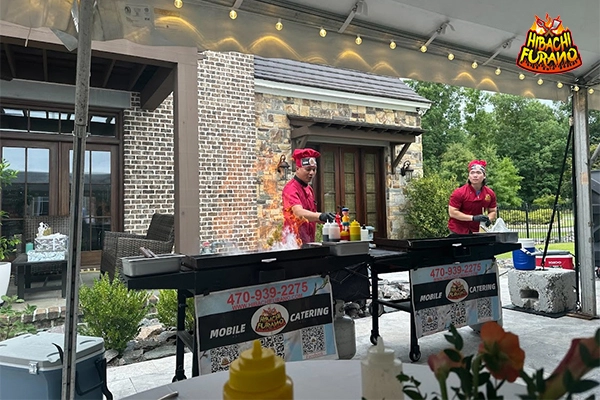
Private Mobile Hibachi Chef at Home. We Serve Atlanta and Surrounding Areas.

If you’ve ever been to a Japanese steakhouse in the U.S. or booked mobile hibachi Atlanta GA, you’ve probably noticed something interesting: what Americans call “hibachi” usually isn’t hibachi at all.
In Japan, the cooking style most Americans recognize — chefs cooking on a flat iron grill with knives flying and shrimp flipping — is actually called teppanyaki. So how did the word hibachi become the go-to term in America?
The answer is a mix of history, marketing, and cultural adaptation — and it explains why today, terms like hibachi at home Atlanta, hibachi catering Atlanta, and mobile hibachi chef Atlanta are so widely used.
In Japan, a hibachi is not a flat grill at all.
Traditionally, a hibachi is a small, bowl-shaped charcoal heating device, often used for warmth or simple cooking. It looks more like a portable fire pot than a restaurant grill.
Key points about traditional hibachi:
Uses charcoal
No flat cooking surface
Not designed for performance cooking
Rarely used in modern restaurants
So when Americans talk about “hibachi chefs” or “hibachi grills,” they’re technically using the wrong word.
Teppanyaki comes from two Japanese words:
Teppan (iron plate)
Yaki (grilled or cooked)
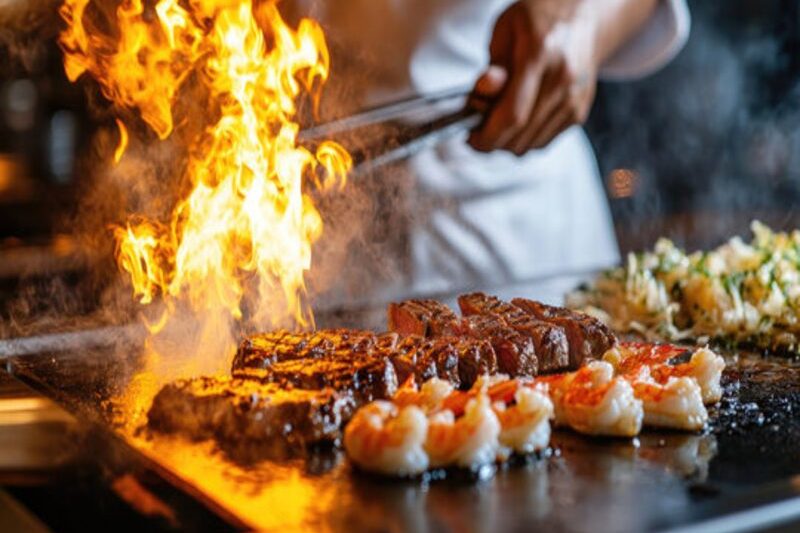
This is the flat-top iron grill cooking style made popular by chefs performing live in front of guests — flipping food, cracking eggs mid-air, and turning dinner into entertainment.
This is the style used by:
Japanese steakhouse restaurants in the U.S.
At home hibachi chef Atlanta services
Mobile hibachi catering Atlanta
Backyard and private hibachi parties
So yes — what Americans call hibachi is actually teppanyaki.
When Japanese steakhouses first became popular in the U.S. in the mid-1900s, many restaurants used the word hibachi because it sounded more familiar and exotic to American diners.
“Hibachi” was:
Easier to pronounce than “teppanyaki”
Already loosely associated with Japanese cooking
Catchier for marketing and signage
From a branding standpoint, hibachi is:
Shorter
Easier to remember
More conversational
That’s why people search for:
hibachi at home Atlanta
mobile hibachi Atlanta
hibachi chef for private party Atlanta
Even today, most Americans don’t search for “teppanyaki catering,” even though that’s the technically correct term.
In the U.S., hibachi has evolved to mean:
“A live Japanese-style cooking experience on a flat grill with entertainment.”
Language adapts to how people use it — and in American English, hibachi now refers to the experience, not the traditional tool.
This is why even professional services like private hibachi chef Atlanta or hibachi catering Atlanta use the term openly and intentionally.
From a cultural perspective, it’s helpful to understand the difference. But from a guest’s perspective, what really matters is the experience.
When you book ATL Hibachi, you’re getting:
A skilled chef
Live, interactive cooking
High-quality proteins and vegetables
A fun, social atmosphere
Whether you call it hibachi or teppanyaki, the experience is what people remember.
For modern American dining, especially for:
Hibachi birthday party at home
Mobile hibachi catering
Personal hibachi chef Atlanta
Using the word hibachi simply makes sense.
It aligns with:
How people search online
What guests expect
How the experience is marketed
That’s why businesses like ATL Hibachi use the term — not because it’s inaccurate, but because it’s culturally understood.
Not technically. In Japan, hibachi refers to a charcoal heating device, while teppanyaki is the flat-top grill cooking style. In the U.S., “hibachi” commonly means teppanyaki.
Because hibachi is easier to say, easier to remember, and has been used in U.S. restaurants for decades. It became the dominant term through marketing and habit.
Culturally speaking, it’s inaccurate — but linguistically, it’s accepted in American English. Even Japanese-style restaurants in the U.S. use the term.
Most hibachi catering Atlanta companies use flat-top iron grills — the same style used in teppanyaki cooking.
Yes — ATL Hibachi delivers authentic flavors, techniques, and a live chef experience, adapted for modern American at-home dining.
So why do Americans call teppanyaki hibachi?
Because language evolves, marketing matters, and over time, hibachi became the word Americans associate with a fun, interactive Japanese cooking experience. At ATL Hibachi, we embrace that tradition — while delivering fresh ingredients, skilled chefs, and unforgettable moments right in your own space.
Whether you call it hibachi or teppanyaki, one thing is certain: Great food + live cooking = an experience worth sharing.