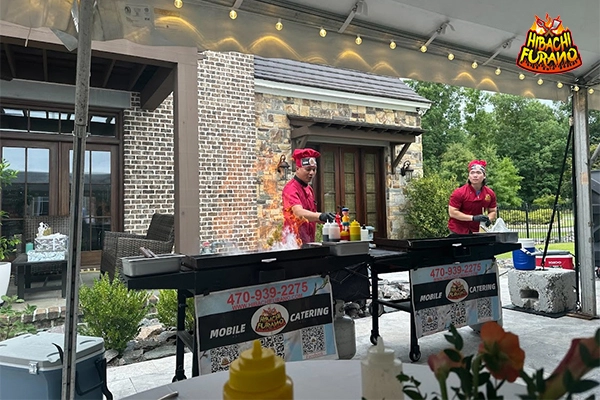
Private Mobile Hibachi Chef at Home. We Serve Atlanta and Surrounding Areas.

What does hibachi mean in Japanese? In its literal sense, "hibachi" (火鉢) translates to "fire bowl," referring to a traditional Japanese heating device used for charcoal, not for cooking meat. What Americans commonly call "hibachi" today is actually "teppanyaki," a style of cooking on a flat iron griddle that originated in the mid-20th century. At ATL Hibachi, we embrace this cultural fusion, bringing the high-energy teppanyaki showmanship directly to your Atlanta home.
If you traveled back to the Edo period in Japan and asked for "hibachi," you wouldn't be served a plate of fried rice and filet mignon. Instead, you would be handed a small, decorative ceramic or wooden pot filled with glowing embers. Historically, these were used to heat homes or light cigarettes.
So, how did a heating pot become synonymous with flaming onions and flying shrimp? When Japanese steakhouses first migrated to the United States in the 1960s, "hibachi" was a simpler, catchier word for Americans to pronounce than "teppanyaki." Over time, the name stuck, creating a unique subculture of dining that is now a staple of Georgia’s culinary scene. To understand what is hibachi in a modern context, one must look at it as a beautiful evolution of Japanese hospitality tailored for the Western palate.
The word Teppan means iron plate, and Yaki means grilled. This style of cooking was popularized post-WWII by restaurants like Misono in Japan, which introduced the concept of a chef performing in front of guests. When you book ATL Hibachi, you are getting an authentic teppanyaki-style performance.
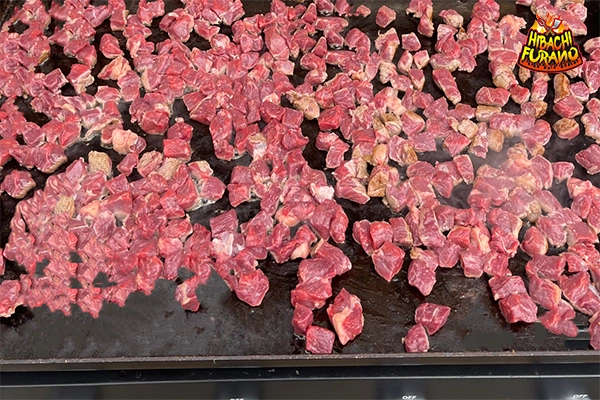
Our chefs use professional-grade steel plates that reach temperatures exceeding 450°F. This intense heat allows for the "Maillard reaction"—the chemical process that gives seared steak its savory, crusty exterior while keeping the inside juicy. This level of precision is difficult to achieve with standard kitchen equipment, which is why the professional hibachi mobile menu experience remains so sought after.
Traditional Japanese dining is often quiet and reserved. However, the "Hibachi" experience we love in Atlanta is a vibrant, loud, and communal celebration. This "theatrical dining" is a testament to how food can bridge cultures.
The jokes, the tool-clinking, and the interactive games are all part of the "Omotenashi" (wholehearted hospitality) spirit. For families looking for backyard hibachi atlanta events, this cultural blend provides more than just a meal; it provides a shared memory that lasts far longer than the dinner itself.
Knowing the difference helps you set the right expectations for your guests. If you tell your friends you are hosting a "Hibachi" party, they are expecting the "Onion Volcano" and the "Shrimp Catch."
If you were to host a traditional Japanese dinner, the atmosphere would be vastly different. By choosing hibachi atlanta at home, you are explicitly choosing the high-energy, Americanized version of this art form. This clarity is essential when calculating your hibachi catering cost, as you are paying for both a world-class chef and a world-class entertainer.
Hibachi (and the teppanyaki style it refers to) is strictly Japanese in origin. While many Asian-fusion restaurants serve hibachi-style dishes, the techniques, sauces, and performance elements are rooted in Japanese culinary traditions.
The practice of tossing shrimp or zucchini for guests to catch is an American innovation designed to increase guest interaction. It transforms the chef from a cook into a performer, making the meal a communal game.
In a traditional setting, simple grilled seafood and high-quality Wagyu beef are the stars. In the U.S. version, the Hibachi Fried Rice is arguably the most iconic and "must-have" dish on the menu.
Rath, E. C. (2024). Food and Fantasy in Early Modern Japan. University of California Press.
Itoh, M. (2023). "The History of the Hibachi." The Japan Times.https://www.japantimes.co.jp
Smithsonian Institution. (2025). The Evolution of Japanese Cuisine in America.
Anderson, E. N. (2025). Everyone Eats: Understanding Food and Culture. NYU Press.
Other popular articles:
How to Host the Ultimate Hibachi Birthday Party at Home in Atlanta?
What is Hibachi? Exploring the Art of Japanese Grilling with Hibachi Furano
Hibachi Catering Guide for 2025: Atlanta-Style Hibachi at Home