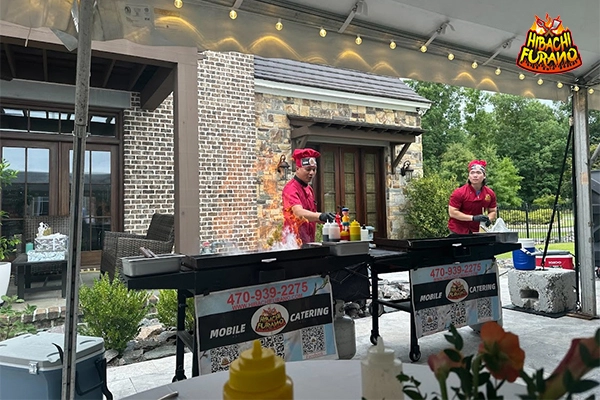
Private Mobile Hibachi Chef at Home. We Serve Atlanta and Surrounding Areas.

What is in hibachi sauce? Typical hibachi restaurant sauces, like Yum Yum sauce and Ginger sauce, are made from a base of mayonnaise, tomato paste, melted butter, and paprika (for the pink sauce), or fresh ginger, soy sauce, and lemon juice (for the brown sauce). At ATL Hibachi, our signature sauces are crafted using premium, fresh ingredients to elevate the private dining experience beyond the standard bottled varieties found in stores.
When you book a private hibachi chef in Georgia, you aren't just paying for the fire show and the knife skills—you are paying for a flavor profile that has been perfected over decades. The sauces are the "silent partners" of the grill. They provide the necessary acidity to cut through the richness of a buttery filet mignon and the creaminess to complement a bowl of smoky fried rice.
While many guests assume these flavors are mysterious "secret recipes," the true magic lies in the balance of simple, high-quality ingredients. In this guide, we will break down the components of the most famous Japanese steakhouse condiments and explain why the ATL Hibachi versions stand in a league of their own. Understanding what is hibachi involves realizing it is as much about the condiments as it is about the high-heat searing technique.
If you ask any local what their favorite part of a Japanese-style meal is, nine out of ten will say "the pink sauce." Interestingly, in Japan, this sauce is virtually non-existent; it is a purely Japanese-American innovation that has become a cultural staple.
The base of a high-quality Yum Yum sauce consists of specific fats and acids. At atl hibachi, we prioritize freshness over shelf-life. The core ingredients include:
Mayonnaise: This provides the creamy texture.
Tomato Paste: This gives the sauce its signature pale pink hue and a hint of tang.
Melted Butter: For that rich, decadent mouthfeel.
Sugar & Paprika: To balance the savory notes with a touch of sweetness and smokiness.
Garlic & Onion Powder: The aromatic backbone.
We avoid the heavy preservatives found in commercial "bottled" Yum Yum sauces. Our chefs believe that the sauce should enhance the meat, not mask it. By using a specific ratio of spice to cream, we ensure our sauce remains light enough for dipping but bold enough to leave a lasting impression.
While Yum Yum sauce is the crowd favorite, the Ginger Sauce (often referred to as the "brown sauce") is the chef's favorite. It is designed specifically for seafood and vegetables. The acidity in ginger sauce acts as a palate cleanser, resetting your taste buds between a bite of shrimp and a piece of steak.
A traditional recipe involves fresh minced ginger, soy sauce, lemon juice, and chopped onion. According to culinary experts at Serious Eats, the key to a great ginger sauce is the "micro-planing" of the ginger, which allows the juices to emulsify with the soy sauce rather than just floating on top. When planning a backyard hibachi atlanta event, having this sauce fresh is non-negotiable for an authentic taste.
One of the most frequent questions we receive is regarding food sensitivities. As a premium mobile catering service, we take cross-contamination and ingredient transparency seriously.
Yum Yum Sauce: Generally, the ingredients in Yum Yum sauce are gluten-free (mayo, butter, spices). However, some commercial brands use thickeners that contain wheat.
Ginger Sauce: This is where the risk lies. Traditional soy sauce contains wheat.
Because we are a private service, we can accommodate "Gluten-Free" requests by substituting traditional soy sauce with Tamari. This allows our guests to enjoy the full experience without compromising their health. If you are researching hibachi atlanta at home options, it is vital to choose a provider that understands these nuances of food safety and customization.
If you have ever watched a chef at work, you’ll notice the ubiquitous clear squeeze bottles. These aren't just for show; they are precision tools. One bottle contains water to steam vegetables, one contains oil for the sear, and others contain the signature sauces.
The viscosity of the sauce must be perfect. If the Yum Yum sauce is too thick, it won't drizzle over the fried rice correctly. If the Ginger sauce is too thin, it won't cling to the vegetables. Our chefs calibrate these sauces daily to ensure they perform perfectly on the 400°F grill surface. This level of detail is a standard part of our hibachi mobile menu offerings, ensuring every bite is seasoned to perfection.
You’ve seen them in the grocery aisles—bottles labeled "Japanese Steakhouse Sauce." While convenient, these mass-produced versions often rely on high-fructose corn syrup and artificial stabilizers to keep them shelf-stable for months.
When a professional chef arrives at your door, the sauces are fresh. There is a structural difference in the fat molecules of fresh butter and real mayonnaise that simply cannot be replicated in a plastic bottle. The heat of the freshly grilled shrimp reacts with the cool, fresh sauce in a way that creates a "flavor bridge," a concept often discussed in Food & Wine as the pinnacle of interactive dining. Furthermore, when you look at the total hibachi catering cost, the inclusion of these premium, hand-made condiments adds significant value that store-bought options lack.
The yellow sauce is typically a Mustard Cream Sauce. It is made from dry mustard powder, hot water, cream, and soy sauce. It is most commonly paired with beef because the sharp mustard cuts through the fat of the steak.
The term "White Sauce" originated in the early days of Japanese-American steakhouses in the 1970s. While it has a pinkish tint due to the paprika and tomato paste, it was originally called white sauce to distinguish it from the dark, soy-based ginger sauce.
While some traditional restaurants use MSG (Monosodium Glutamate) to enhance umami, many modern caterers rely on natural umami from high-quality soy sauce, garlic, and fresh vegetables to achieve the same savory depth without the additives.
Absolutely! Many of our clients love using leftover Yum Yum sauce on their side salads or even as a dip for French fries. Its creamy, tangy profile makes it incredibly versatile for various appetizers.
Ginger sauce is best paired with high-water-content vegetables like Zucchini, Onions, and Mushrooms. The sharp ginger notes complement the caramelized sweetness of the grilled onions perfectly.
Gisslen, W. (2025). Professional Cooking (10th ed.). Wiley Publishing.
Lopez-Alt, J. K. (2024). The Food Lab: Better Home Cooking Through Science. W. W. Norton & Company.
Mayfield, D. (2023). "The History of the Japanese Steakhouse in America." Gastronomica: The Journal of Critical Food Studies.
National Restaurant Association. (2025). Food Safety and Allergen Guide for Caterers.https://www.restaurant.org
Other popular articles:
How to Host the Ultimate Hibachi Birthday Party at Home in Atlanta?
What is Hibachi? Exploring the Art of Japanese Grilling with Hibachi Furano
Hibachi Catering Guide for 2025: Atlanta-Style Hibachi at Home